ASK THE PSYCHOLOGIST ISSUE 64: Do You Recommend Psychedelic Drugs for the Treatment of Post Traumatic Stress (PTS) Etc.?
On April 18, 2026, President Donald Trump signed an executive order intended to accelerate the development of psychedelic drugs as medical treatments. The order calls for the Food and Drug Administration (FDA) to give expedited consideration to psychedelics that meet certain criteria. It also calls for the Department of Health and Human Services to direct $50 million to match investments made by state governments into researching psychedelics as treatments for mental-health conditions.
The answer to the above question for this current issue 64, –“Do you recommend psychedelic drugs for the treatment of Post Traumatic Stress (PTS) Etc.?–
, is an emphatic, NO !!
Let’s remember that mental health leaders, primarily psychiatry, have failed miserably in their treatment of Post Traumatic Stress (PTS) for decades, initially identifying the panacea and financial benefits, of using a black box warning (FDA warning that the drug can cause death), brain altering, psychiatric medications. The reason I state “PTS” without the “D” is primarily because for the past 50 years +, I have been stating, repeatedly, that PTS is a normal reaction to being in an abnormal environment, both for military personnel and civilians. After founding and directing “ The International Tri-Service Combat Stress Conference for 24 years, I have concluded that the best treatment approach for PTS is Integrated Treatment (i.e. nutrition, exercise, yoga, polities’, canine therapy, equine therapy, etc. ,etc.….), without brain altering drugs, which also includes the proposed psychedelics. For more in dept information about Integrative
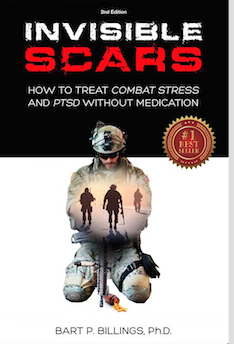
Treatments, read the book that has actually saved lives (Documented), “Invisible Scars”.
It appears that psychiatry, as a profession and the leaders of mental health care, has failed miserably in stopping the tremendous numbers of suicides over the past 30 plus years, both in the military and in the civilian community. What they have not done, for decades, is to develop informed written consent for patients, which should include, advising of the side effects of psychiatric meds, one being suicidality as well as several other destructive adverse events. Also, they should advise of integrative treatment modalities, as an alternative treatment to brain altering drugs. Currently there is a congressional bill being proposed (Later described in this issue), that would in fact, provide what is mentioned above. It is of no surprise to me that psychiatry and big pharma are opposing this commonsense bill that could save thousands of lives.
This bill is a long time coming for me personally, since I have been in the mental health field for sixty years and have seen the devastating effects of brain altering medication.
I remember in 1967, while doing an internship that involved seeing patients at a mental hospital in upper state New York, questioning why most of the psychiatrists working there were from foreign countries, not familiar with the culture in the USA and speaking broken English.
I realized that they did not need to communicate with their patients since their primary treatment modality was to administer psychiatric, brain altering medication.
I commonly saw what then was called the “Thorazine shuffle” which was a slang term describing a slow, shuffling, or awkward walking gait. It is a side effect often observed in individuals—commonly patients in psychiatric care—taking high doses of the antipsychotic medication Thorazine (chlorpromazine) or similar drugs, which can create a stiff or “zombie-like” physical state. I realized then that it was near impossible to do any type of psychotherapy with a patient whose brain was so severely altered by these medications.
With the passing of years, you would think psychiatric treatment modalities would have changed for the better. In June 2003, I was appointed by the Governor of California, to be on the Governors Advisory Board at Patton State Hospital, which at the time, was one of the largest psychiatric hospitals for mentally ill offenders in the country. I initially discovered that patients were receiving only one and a half hours a week of psychotherapy. Also 98% of the patients in the hospital were on psychiatric medication. To no surprise, the director of the hospital was a pharmacist and not a mental health professional. I attempted to convince the administration to increase the number of hours of face-to-face psychotherapy and when I left my position after a few years, I only got the number of hours of psychotherapy to three hours a week.
Are we headed now in the same direction as in the past, by considering using another brain altering medication that has been tried years ago, with detrimental effects. Timothy Leary (1920–1996) was a psychologist and prominent counterculture icon who popularized psychedelic drugs (LSD, psilocybin) in the 1960s. After studying the effects of psychedelics at Harvard, he advocated their use in exploring consciousness, “turning on” to new realities. Leary championed “set and setting” for safe experiences and coined the phrase “turn on, tune in, drop out”. After being dismissed from Harvard, Leary became a public counterculture figure, which led to him being labeled “the most dangerous man in America” by the President of the United States at that time. Our current president should consider this now, since if we don’t learn from the past, we will continue to make the same mistakes. Our Vets and citizens deserve better now.
With the president now being advised to accelerate the development of psychedelic drugs as medical treatments, one can only remember the last time he called for the Food and Drug Administration (FDA) to give expedited consideration to the development of the COVID Vaccine. The adverse reactions (i.e. death, turbo cancers, heart problems, etc., etc.), of this vaccine are now being exposed in actual scientific research articles.
At present, the President of the United States is being influenced by staff and friends, that the cure for PTS and other psychological problems, is psychedelic medications. Some of these people swear to the personal benefits they and their acquaintances have experienced. But the possibility of medication spellbinding should be considered. This iswhen a person is unaware of or denies the negative effects a medication (particularly psychoactive drugs) is having on them; it is known as intoxication anosognosia or medication spellbinding. This state involves a cognitive inability to recognize that the drug is causing harm or changing their behavior. I recall a patient telling me how great their mother was functioning on a psychiatric medication. But when further questioning this person, it was obvious that the traits that made her mother unique as a person (like sewing, artwork), she could no longer perform since the medication limited this skill.
Key details regarding this phenomenon include:
- Definition: A form of anosognosia (denial of illness) where the drug itself impairs the user’s ability to recognize they are impaired.
- Context: It often occurs with psychiatric medications, including stimulants and benzodiazepines.
- Symptoms: The individual may not feel the harmful effects or may feel deceptively good while experiencing negative changes.
- Paradoxical Reactions: Sometimes, medication causes the opposite of its intended effect (e.g., agitation instead of sedation, suicide instead of preventing suicide), which is termed a paradoxical reaction
Below are descriptions of how psychedelics affects the brain and its adverse reactions. After reading them, ask yourself if you would voluntarily take them.
Psychedelics primarily affect the brain by binding to serotonin 2A (5-HT2A) receptors, which are densely located in the cortex—particularly the prefrontal cortex—and the claustrum. By activating these receptors, substances like psilocybin and LSD alter the brain’s functional connectivity, generally disrupting the default mode network (DMN)—responsible for self-awareness and introspection—while increasing communication between normally separate brain regions.
Key brain areas and networks affected include:
- Default Mode Network (DMN): Psychedelics temporarily reduce the synchronization and connectivity within this network. This reduction is linked to experiences of “ego dissolution” or a diminished sense of self.
- Prefrontal Cortex (PFC): As a high-level control center involved in cognition, mood, and perception, the PFC is heavily impacted, allowing for increased flexibility in thought and emotion.
- Claustrum: This area acts as a “switchboard” for the brain. Psychedelics reduce its activity, which contributes to altered perception and a feeling of being connected to everything.
- Hippocampus: Studies show that psychedelics reduce connectivity between the DMN and the hippocampus, which may contribute to lasting changes in how a person perceives themselves in relation to the world.
- Sensory Cortex: Psychedelics increase connectivity between the brain’s sensory, memory, and emotional centers. Key Mechanisms:
- Brain Desynchronization: Psychedelics disrupt the orderly, slow-wave communication between distant brain regions, replacing it with more chaotic, fast-wave (gamma) communication.
- Increased Plasticity: They act as “psychoplastogens,” which can rapidly increase the growth of new dendritic spines and neurites in cortical neurons.
- Serotonin 2A Activation: While serotonin is involved in many brain functions, the 5-HT2A receptor is the primary mediator of the psychedelic experience.
- How Psychedelics Affect the Brain | American Brain Foundation
How Psychedelics Affect the Brain * Ongoing experimental research is exploring how psychedelics like psilocybin affect the brain …How psychedelic drugs alter the brain | National Institutes of Health (NIH)
Psilocybin caused activity within brain networks to become less synchronized. It also led to less distinction between brain networks…
National Institutes of Health (.gov)
- Psychedelic and Dissociative Drugs
All of these substances have mind-altering properties with the potential to cause changes in thought processes, mood, and perception…
Key Mechanisms:
- Brain Desynchronization: Psychedelics disrupt the orderly, slow-wave communication between distant brain regions, replacing it with more chaotic, fast-wave (gamma) communication.
- Increased Plasticity: They act as “psychoplastogens,” which can rapidly increase the growth of new dendritic spines and neurites in cortical neurons.
- Serotonin 2A Activation: While serotonin is involved in many brain functions, the 5-HT2A receptor is the primary mediator of the psychedelic experience.
Adverse reactions to psychedelic drugs (such as LSD, psilocybin, mescaline, and DMT) range from acute, temporary distress to long-term psychological issues, often heavily influenced by the user’s “set and setting” (mindset and environment). While physically, these drugs are often considered non-toxic at typical doses, they can cause significant psychological distress, with “bad trips” involving intense fear, panic, and paranoia. National Institute on Drug Abuse (NIDA) (.gov)
Acute Adverse Reactions (“Bad Trips”)
- Psychological Distress: Intense anxiety, panic attacks, extreme paranoia, confusion, and terrifying hallucinations.
American Addiction Centers
- Behavioral Risks: Impaired judgment, disorientation, and confusion can lead to accidental injuries, self-harm, or suicidal ideation.
- al Institute on Drug Abuse (NIDA) (.gov)
- Physical Symptoms: Increased heart rate (tachycardia), hypertension, elevated body temperature, nausea, vomiting, tremors, and loss of muscular coordination.
American Addiction Centers
- Psychotic Episodes: In rare cases, temporary acute psychosis or “schizophrenia-like” syndromes may occur, particularly in individuals with a personal or family history of such illnesses.
Long-Term or Lasting Adverse Effects
- Hallucinogen Persisting Perception Disorder (HPPD): Known as “flashbacks,” this condition involves recurring, distressing visual disturbances (e.g., halos, trails, static) that persist for weeks, months, or years
- Prolonged Psychological Issues: Some users experience long-term anxiety, depression, or depersonalization (feeling detached from one’s body) after a negative, intense experience.
- Existential Struggle: Users may report lasting feelings of social disconnection and severe confusion about reality. JAMA
Specific Risks and Factors
- Polysubstance Use: Mixing psychedelics with alcohol or other drugs (e.g., cannabis, amphetamines) can increase the likelihood of adverse reactions.
- Contaminants: Illicitly manufactured or “street” psychedelics may be contaminated with dangerous substances like fentanyl or substituted with more dangerous compounds like NBOMes.
- Contraindicated Medications: Combining psychedelics with substances that increase serotonin (e.g., SSRIs, lithium, MAOIs) can theoretically lead to serotonin toxicity.
- Pre-existing Mental Health Conditions: Individuals with a history of psychosis or bipolar disorder are at higher risk of severe adverse reactions Overdose Potential
While classic psychedelics are rarely fatal, severe overdoses (often linked to very high doses or, more commonly, combinations with other substances) can result in seizures, coma, or death due to accidents (A requirement for a FDA black box warning.).
Below is what the VA should permanently implement with a Congressional Bill for all Vets and citizens.
The prior director of the VA stated the following. “The Department of Veterans Affairs has agreed to implement informed written consent for four categories of psychotropic medications. Under this policy, VA will provide veterans with clear, written information on risks, side effects, and alternative treatment options before dispensing certain high-risk medications, including antipsychotics, antidepressants, stimulants, and anxiolytics.
I have been a strong supporter of this policy. Ensuring that veterans fully understand the benefits and risks of these medications is a critical step toward improving patient safety, strengthening shared decision-making, and promoting more thoughtful prescribing practices. This important development reflects the strong advocacy of many leaders across the veteran’s community. It represents meaningful progress toward protecting veterans and improving the quality of mental health care and ultimately, it will help save lives.
Gratitude for the support of Iraq and Afghanistan Veterans of America (IAVA) Veterans of Foreign Wars (VFW) DAV (Disabled American Veterans) Jewish War Veterans of the USA ISPS-US Inner Compass Medication Safety Alliance Military Order of the Purple Heart of the U.S.A., Inc. Fleet Reserve Association Navy SEAL Foundation John Spagnola National Defense Committee Tragedy Assistance Program for Survivors Commissioned Officers Association of the U.S. Public Health Service Marine Corps League Special Operations Association of America Grunt Style Foundation #veterans”
P. Billings, Ph.D.
COL SCNG-SC, Military Medical Directorate (Ret.)
Functioned as: Licensed Clinical Psychologist CA PSY 7656
Licensed Marriage, Family Therapist CA LMFT 4888
-Director/Founder International Military & Civilian Combat Stress Conference
-Initial Enlisted Ranks and Retired as Medical Service Corps Officer with a total of 34 years in US Army
-Recipient of the 2014 Human Rights Award from Citizens Commission on Human Rights International & The University Of Scranton “Frank O’Hara Award” in 2016.
bartbillings@yahoo.com
http://bartpbillings.com (“How The Media Creates Victims…,Invisible Scars” & “Unhealthy Eating …” Books Website)
www.combatstress.bizhosting.com (Combat Stress Conference website)
www.youtube.com/watch?v=F02HElsg8uI
Cell 760 500-5040
Ph 760 438-2788
MOST CURRENT BOOK
https://www.amazon.com/How-Media-Creates-Victims-sacrifice/dp/1957832835
Customer reviews
4.7 out of 5 stars
–“Dr. Billings has beautifully consolidated and researched the major issues that our country faces today.”–“purchased 50 COPIES of the book to give out as gifts!”–“book proves that Google = Goebbels, Meta = Marx, and Media = Mayhem”
Some Amazon 5 Star
Recent Customer Reviews
– This Book Saved My Life.
– I am sure that this book will save lives.
– 25 pages into Invisible Scars, I knew that it was the second most important book I would ever read…after the Bible. — David T. Ossian, Asst. National Vice Commandant , Marine Corps League
– This book is life changing…everyone needs to read …. http://a.co/4wlhtsa Danny Jimenez
5.0 out of 5 stars I have lost 140 lbs in 3 years …
At least 70 is from this Book